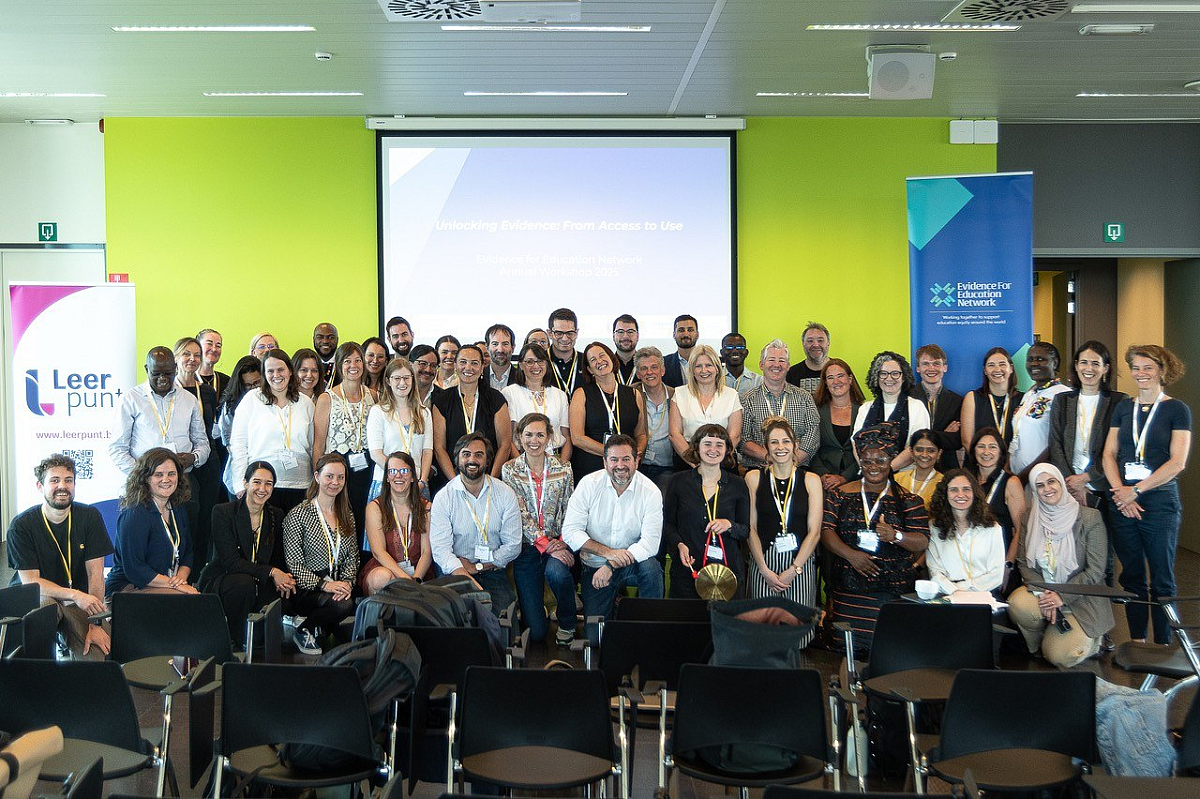
The 2025 EEN Workshop was hosted in Belgium by Leerpunt.
Kicking off the EEN Workshop 2025: Opportunities to share and learn
The EEN Workshop 2025 was hosted by Leerpunt in Ghent, Belgium, from the 12th – 14th of May 2025.
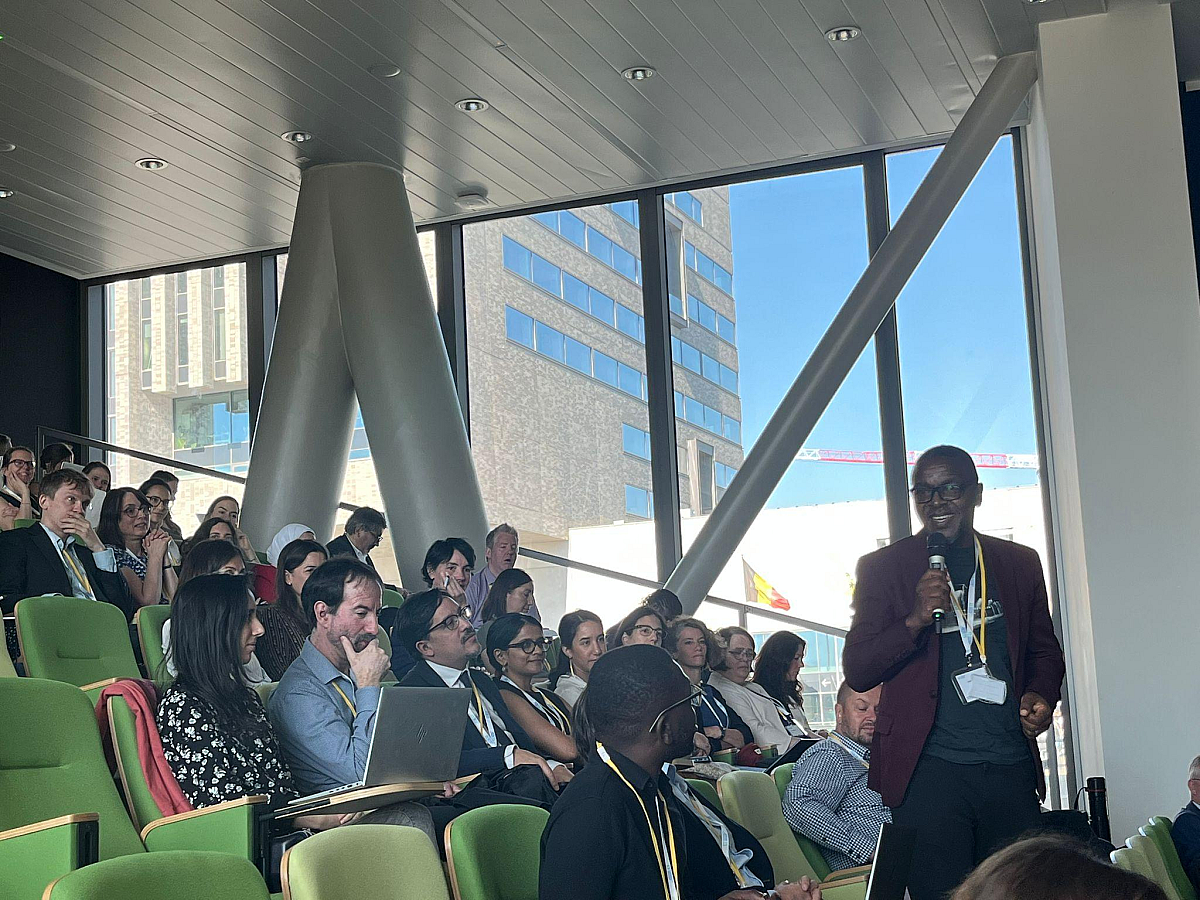
The event opened with a reminder of the network’s founding belief: evidence can change lives. While ‘evidence-informed’ practice has certainly become the norm, speakers stressed the importance of balancing rigorous evidence with sensitivity to local contexts. As Patrick Okwen (eBASE Africa) put it: “We have more similarities than we have differences, but we must look at those differences carefully”. This tension between rigour and relevance set the tone for the three days of learning and discussion.
The power of equitable evidence partnerships
Evidence must be built and shared through partnerships that are genuinely equitable. EEN members share a belief that evidence is a global good: it belongs to everyone that uses it, and its value lies in being globally representative, reflecting on-the-ground realities. To be genuinely useful to policymakers and practitioners, evidence cannot be produced or interpreted from a single vantage point. It must capture a diversity of contexts, experiences, and challenges.
Keynote speaker, Ruth Stewart (Alive), prompted members to reflect on both similarities and differences. The network shares a commitment to closing equity gaps and improving learning outcomes around the world – but for evidence to be genuinely useful, it must be mobilised in ways that are sensitive to context. Ruth reminded attendees that partnerships are essential, and that we often learn most from those who are least similar to us. The range of perspectives within the EEN is therefore one of its greatest strengths. For this potential to be realised, this diversity of perspectives must be reflected in the network’s governance – who makes decisions, whose voices are heard, and how power is distributed. Building trust within the network requires transparency, shared ownership, and decision-making processes that incorporate perspectives from across the globe.
Attendees also had the opportunity to hear from friends of the EEN in a panel on network-to-network relationships. Panellists highlighted ways in which the EEN can strengthen its work and contributions to the wider education ecosystem. Aziz Abdoul Adama (IPA Francophone West Africa) underlined that evidence must be demand led: policymakers need to see their contexts reflected in the research base in order to envision pathways to impact. Swathi Attavar (What Works Hub for Global Education) encouraged a focus on co-constructive approaches, where evidence brokers learn from governments about their policy demands and establish close working relationships with mid-level staff to identify capacity needs. Lou Aisenberg (JPAL Europe) pointed to the role of partnerships with researchers and academics to address evidence gaps, ensuring that new research responds to real policy questions.
This network lens was a reminder that the EEN does not exist in a vacuum, symbolising just one ‘hive’ in the education evidence space. Nora Revai (OECDCERI) shared mapping work, identifying initiatives focused on coordinating education evidence. Nora noted that overlap is not something to be afraid of: it signals a shared belief in the power of evidence. However, coordination is vital. Lou Aisenberg added, encouraging EEN members to be transparent about their incentives, strengths, and constraints, and open to learning from organisations both inside and outside the network. In doing so, we can avoid duplication, strengthen trust, and enhance our collective impact.
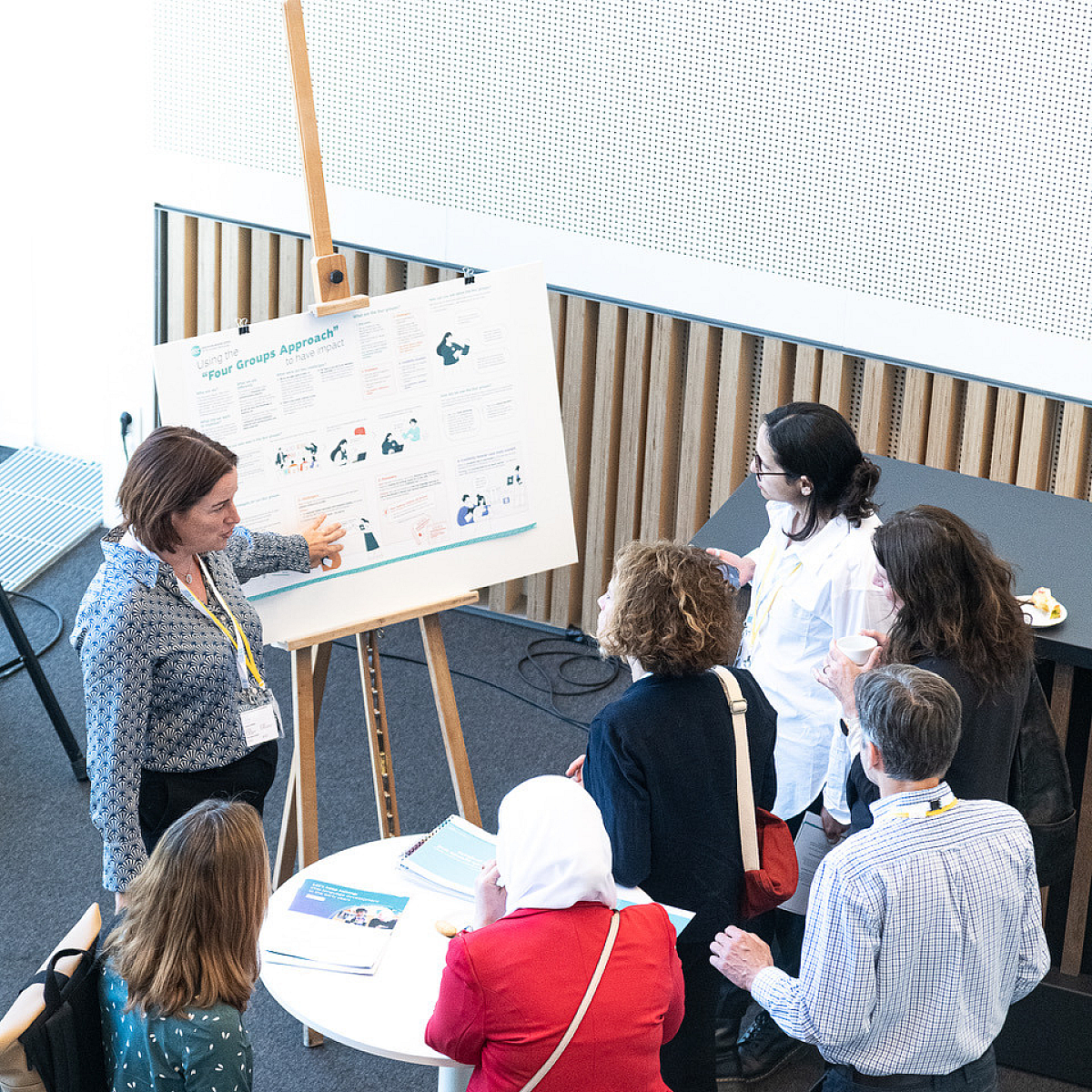
How can we mobilise knowledge in ways that truly drive change?
Moving from evidence access to evidence use remains one of the most complex challenges for the education evidence community. The Evidence into Practice Working Group framed it as a question of behaviour change: EEN organisations are not just sharing findings but trying to influence what decisionmakers do every day.
In her keynote, Prof. Dr. Kristin Van Lommel urged members not to simply provide evidence and resources, but to invest in the mechanisms that make it usable in order to change outcomes. Teachers, she suggested, must be thought of as researchers themselves, and EEN members have a role to play. Being in conversation with teachers and using their insights can ensure that evidence brokers’ work is relevant to practice needs: “Don’t start from the evidence. Start from what needs to change”. Leerpunt’s initiative to pair researchers with practitioners to work on co-constructed research projects illustrated this approach. Working together, researchers and practitioners can build the knowledge base in education, foster a learning culture in schools, and use implementation insights to ensure that evidence speaks directly to school priorities and realities.
At the policy level, Juan Hernández-Agramonte (IPA Global) described how embedded labs within governments can bridge the gap between evidence and decision-making. These models connect policy challenges with implementation insights, embedding evidence in the policy cycle. In systems where education decision-making is highly centralised, the embedded labs model can be an effective lever for influencing practice at the school level. Complementing this, the Synthesis Working Group stressed the importance of evidence literacy as an enabler, with initiatives like Zizi Afrique Foundation’s Synthesis Academy building government staff’s capacity to use evidence synthesis methods effectively.
Across the network, members shared practical examples of evidence mobilisation, focusing on the ways in which they interact with and influence policy and practice:
- EduCaixa’s Leadership for Learning Programme
builds professional communities, and trains school leaders in preparing, implementing, and assessing improvement projects in their schools. - eBASE Africa assessed the accessibility of resources from five evidence brokers/translators, highlighting the importance of making evidence accessible for people with disabilities to support the mobilisation of evidence for decision making at the household level.
- OECD’s Schools+ Teaching Taxonomy
outlines five key goals related to high quality teaching, and 20 evidence-based teaching practices teachers can draw upon to achieve them. The taxonomy is a tool to facilitate knowledge exchange and implementation insights around effective research-informed practices. It was developed iteratively in collaboration with stakeholders across the education system. - NRO’s Knowledge Roundabout mobilises research through a field-driven approach. Teachers can submit queries online and work with researchers to develop these into research questions. The researchers conduct literature searches and write concise reports summarising insights.
- SUMMAsupported a national evidence-informed education reform in El Salvador, designing a public policy co-produced with the MoE. International evidence was crucial in justifying the urgency for structural reform and securing ministerial support.
Challenges and opportunities in evidence mobilisation: what can we learn from different contexts?
While EEN members share common principles and understandings of education evidence, each organisation works within distinct realities, guided by distinct theories of change. This diversity was on full display in roundtable discussions on practical challenges members were facing. From embedding pedagogical resources for frontline practitioners in LAC, to integrating randomised control trials into broader education reform in Poland, to supporting evidence use in early childcare and education in England. Working together in small groups, participants offered insights and workshopped solutions drawing from their range of contexts and experiences, creating a supportive space for candid problem-solving.
Collaboration continued into the final day, when attendees broke out into thematic roundtables focused on priority areas. In research-on-research use, participants identified the need to think beyond teacher attitudes towards evidence as an outcome measure – to understand evidence use, we need to consider the structural influences in place that affect decisionmakers. In initial teacher education, participants acknowledged the importance of alignment, and windows of opportunity: ensuring that teacher education programmes are evidence-informed, emphasising the importance of using evidence to inform practice at the nascent stages of a teacher’s career. In numeracy, mathematical problem- solving ability and maths anxiety are common challenges across many countries. These sessions provided an opportunity not only to share knowledge, but to build connections with subject experts and identify windows of opportunity for future collaboration.
Together, these strands of discussion demonstrated that challenges are not just barriers, but starting points for innovation. Sharing differences and exploring opportunities collectively reinforced the EEN as a platform for both learning and action.
Reflections: “we have only just started”
As the workshop closed, members reflected on key takeaways and emerging priorities for the network.
A central message was the growing recognition that understanding how evidence is mobilised is just as important as the evidence itself. The role of the EEN is evolving, from sharing content, to focusing on the contexts in which evidence can drive meaningful change. Members act as a bridge between knowledge and practice, which means looking closely at the systems that shape evidence use, and ensuring the voices of teachers and policymakers are meaningfully included. As Nain Yuh (eBASE Africa) put it: “everyone that uses evidence is very important”.
In a time of funding cuts and constraints for education and development, the value of the EEN has become even clearer: “when we have less, we need to share more”. As Inge de Wolf (NRO) and Javier Gonzalez (SUMMA) reminded attendees: every crisis has an opportunity. When resources are limited, evidence becomes all the more essential in guiding effective spending and decision-making. For EEN members, this calls for stepping forward as evidence brokers to provide the resources and support for effective decision-making.
The EEN Workshop 2025 highlighted that the network’s strength lies not only in the evidence it holds, but in the connections, collaboration, and collective action of its members. Over the course of the event, attendees identified shared challenges, surfaced practical strategies, and renewed a collective commitment to achieving education equity through evidence use. As well as continuing to deepen connections and apply insights in practice, the network will focus on ensuring that its own structures, practices, and partnerships reflect these same equitable principles, so that the EEN itself continues to model the globally representative approach it champions.